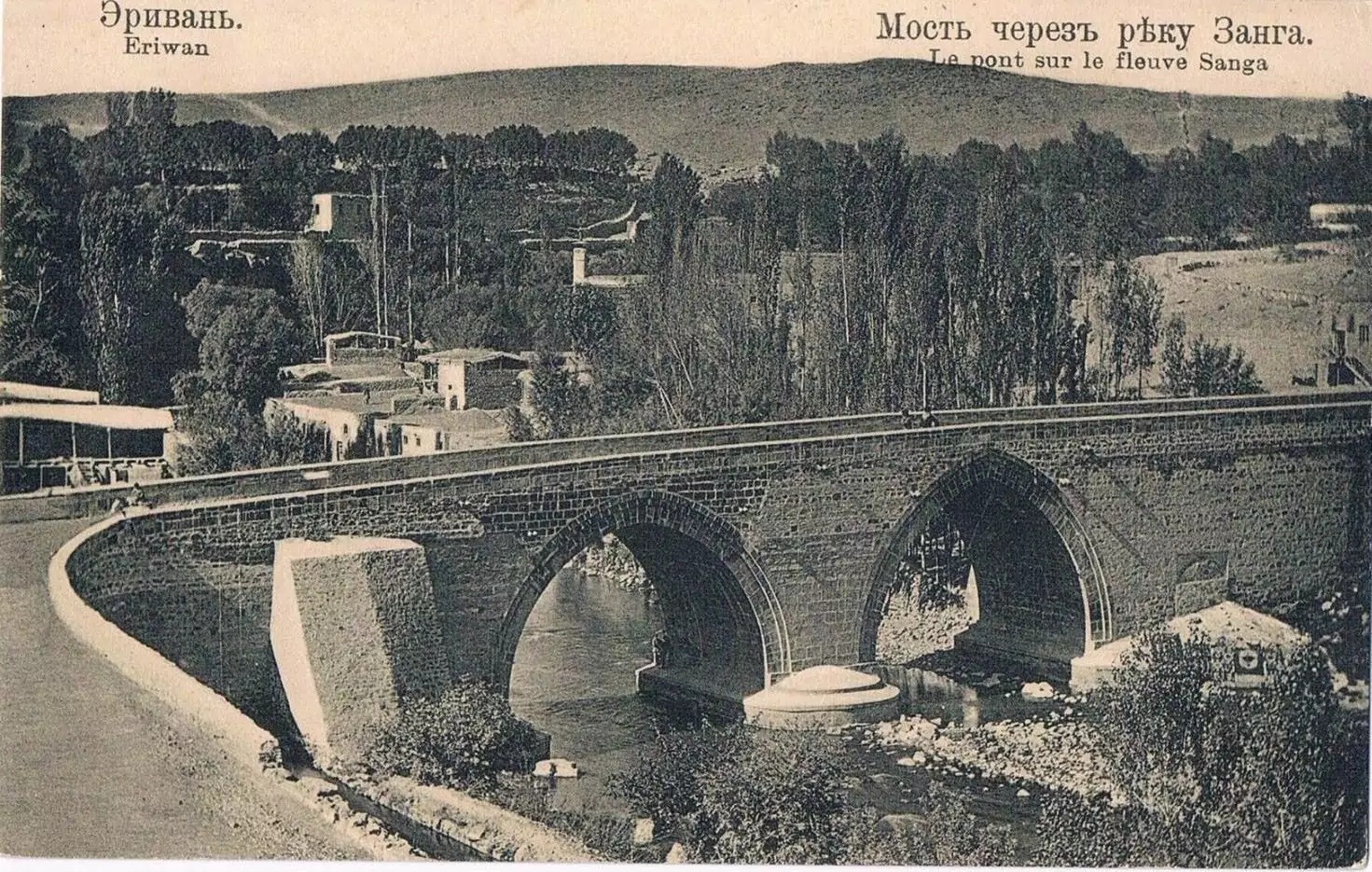
The destroyed cultural heritage of Western Azerbaijan
Western Azerbaijan is an ancient land located within the borders of the Republic of Armenia (RA) today and historically inhabited by Azerbaijani Turks. These territories have a rich material and spiritual cultural heritage, distinguished by numerous architectural examples, religious monuments, cemeteries, fortresses and settlements formed in different periods. However, starting from the beginning of the 20th century, as a result of the political processes taking place in the region, especially the policy of ethnic cleansing, this cultural heritage has been seriously damaged, and in many cases completely destroyed. One of the historical regions of the mentioned territory was the Iravan Khanate. This territory existed as one of the Azerbaijani khanates in the 18th century and numerous architectural monuments were built here. The ancient mosques, caravanserais and palace complexes located in the city of Iravan (now Yerevan) were an indicator of the developed urban culture of the region. One of the most famous of these monuments was the Sardar Palace located within the Iravan Fortress. The palace was considered one of the finest examples of Eastern architecture. However, in the 20th century, this monument was completely destroyed and its traces were erased. Another important religious monument in Yerevan was the Blue Mosque. Built in the 18th century, this mosque was considered one of the main religious centers of the region. Its architectural style reflected the classical features of Azerbaijani-Islamic architecture. In later periods, this mosque was used for various purposes and its religious function was limited. This is considered a functional change and assimilation of cultural heritage. Another important region of Western Azerbaijan is the Zangezur region. The region was of great importance both strategically and culturally. The numerous cemeteries located in Zangezur, especially the ancient Turkic-Islamic tombstones, were the main material evidence proving that Azerbaijani Turks lived in the region for centuries. However, in recent decades, most of these cemeteries have been destroyed, the tombstones destroyed or used for other purposes.Like the other regions mentioned, the Goycha region also carries a rich cultural heritage. Thus, there were numerous mosques, madrasahs and shrines in the villages located around Lake Goycha. These monuments served not only as religious, but also as centers of socio-cultural life. However, as a result of the deportation of the Azerbaijani population from these territories in the 20th century, these monuments were neglected and many of them were destroyed.The destruction of cultural monuments was not limited to physical destruction, but was also accompanied by a change in their historical identity. In a number of cases, the origin of the monuments was falsified, and it was claimed that they belonged to other peoples. This is considered an integral part of the policy of appropriation of cultural heritage. In such cases, although the architectural style, written sources and archaeological evidence clearly indicate that these monuments belong to Azerbaijani culture, their presentation was changed.The fortresses located in Western Azerbaijan are also of particular importance. These fortresses served both a defensive purpose and reflected the political and military history of the region. For example, defensive structures built around ancient settlements ensured the safety of the local population. However, many of the aforementioned fortresses have either been destroyed or have become unusable due to neglect.The destruction of cemeteries is one of the issues that attracts special attention. Historical cemeteries are not only burial places, but also carriers of ethnographic and epigraphic information. The inscriptions, ornaments and symbols found in ancient cemeteries located in Western Azerbaijan provided important information about the history, language and religion of the region. The destruction of these cemeteries led to the loss of this information.In addition, ancient residential houses, baths and other household objects located in the villages of Western Azerbaijan were also an integral part of the cultural heritage. These buildings were of great importance as examples of folk architecture. However, most of these buildings have been destroyed or completely destroyed over time.The issue of the destruction of cultural heritage in Western Azerbaijan is a serious problem in terms of international law and the principles of the protection of cultural heritage. Although international conventions adopted on the protection of cultural heritage require the protection of such monuments, in reality it is observed that these principles are not followed. This means the loss of not only one people, but also the universal culture.In recent years, a list of destroyed monuments has been compiled and their history documented through research, archival materials and photographs on the subject. This work is of great importance for future generations and serves to ensure that cultural heritage is not forgotten.As a result, the cultural monuments of Western Azerbaijan are an indicator of the rich history and cultural diversity of the region. The destruction of monuments means not only the disappearance of material heritage, but also the erasure of historical memory. Therefore, it is of great importance to research, document and communicate this topic to the international community. The protection of cultural heritage is not only the responsibility of one nation, but of all humanity, and it is necessary to increase efforts in this direction.
Expert on the Caucasus region
Hasan Ahmadov